Weaves
What makes a Nizam border
6 min read · Updated
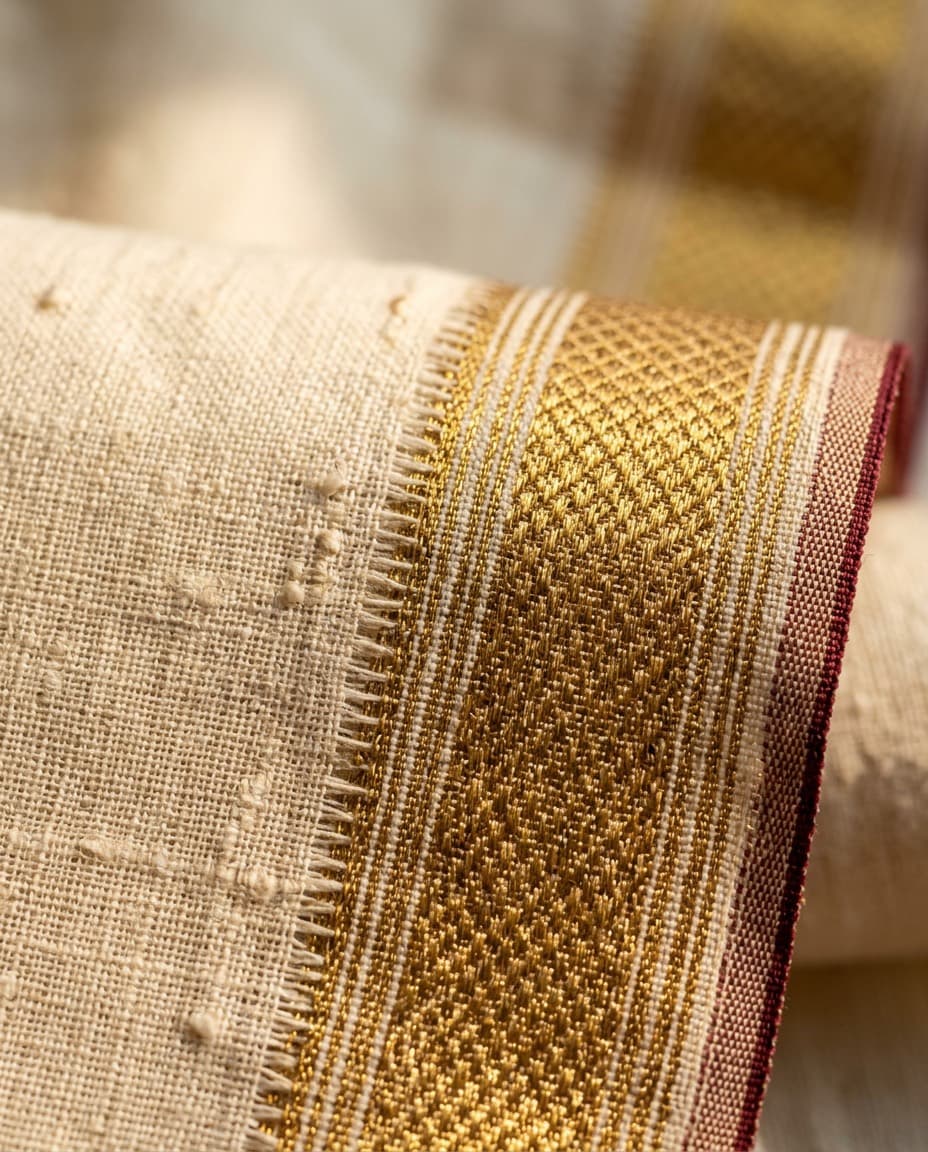
In short
A Nizam border is the signature edge of a Mangalagiri saree: a band of zari woven with tiny inverted checks and minute dots, set against a plain, tightly woven cotton body. It is woven into the cloth on the loom, never printed or stitched on.
Where the name comes from
Mangalagiri weaving grew under the patronage of the Nizam-era courts of the Deccan, and the restrained, geometric border that became fashionable then still carries the name. It is quieter than a temple border and far finer than a broad Kanchi-style band.
How to recognise one
- A narrow zari band, usually 1 to 3 inches wide, running along both edges of the saree.
- Small inverted-check (or "gadi") patterns and dots inside the band, visible on both faces of the cloth.
- No motifs on the body — Mangalagiri sarees are traditionally plain or striped in the body.
- Loose warp threads at the end of the pallu, a sign the border was woven on a handloom.
Why it takes so long to weave
The weaver lifts the warp for the border separately from the body, pick by pick. A single broken zari thread shows immediately, so the border is the slowest part of a saree that already takes around a month on a pit loom.